
With Is Dollar Cost Averaging a Good Strategy? at the forefront, this paragraph opens a window to an amazing start and intrigue, inviting readers to embark on a storytelling filled with unexpected twists and insights. Dollar-cost averaging is a popular investment strategy that many individuals swear by, but is it truly as effective as it’s believed to be? Let’s delve into the intricacies of this approach to uncover its true potential.
As we navigate through the nuances of dollar-cost averaging, we’ll unravel its inner workings, advantages, and potential pitfalls to provide you with a comprehensive understanding of whether this strategy aligns with your financial goals.
Introduction to Dollar Cost Averaging
Dollar-cost averaging is an investment strategy where an investor regularly buys a fixed dollar amount of a particular investment regardless of the asset’s price. This approach aims to reduce the impact of market volatility on investments over time.
How Dollar-Cost Averaging Works
Let’s say an investor decides to invest $500 in a particular stock every month. If the stock price is high, the $500 will buy fewer shares, and if the price is low, the $500 will buy more shares. This strategy helps in averaging out the cost per share over time.
Benefits of Using Dollar-Cost Averaging
- Reduces the Risk of Market Timing: Dollar-cost averaging eliminates the need to time the market, as investments are made regularly regardless of market conditions.
- Discipline in Investing: This strategy encourages regular investing habits, which can lead to long-term wealth accumulation.
- Potential to Lower Average Cost: By buying more shares when prices are low and fewer shares when prices are high, investors can potentially lower their average cost per share over time.
How Dollar Cost Averaging Works
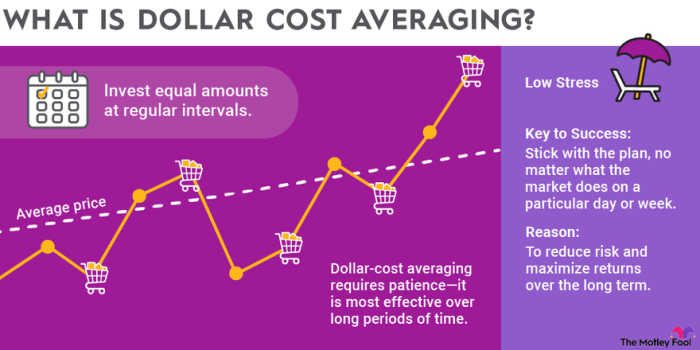
Dollar-cost averaging is a strategy where an investor regularly invests a fixed amount of money in a particular asset over a period of time, regardless of the asset’s price fluctuations. This approach aims to reduce the impact of market volatility on the overall investment.
Implementing Dollar-Cost Averaging
To start implementing dollar-cost averaging, follow these steps:
- Choose the investment amount: Decide on the fixed amount you want to invest at regular intervals.
- Select the frequency: Determine how often you want to make investments, whether it’s weekly, monthly, or quarterly.
- Open an investment account: Set up a brokerage or investment account to facilitate the purchases of the chosen asset.
- Set up automatic investments: Schedule automatic transfers from your bank account to your investment account to ensure consistency in investing.
Impact of Different Investment Amounts
The impact of different investment amounts on dollar-cost averaging can vary:
- Higher investment amounts: Investing a larger sum regularly can lead to greater potential returns over time, especially if the asset’s value increases.
- Lower investment amounts: While smaller investments may result in slower growth, they also reduce the risk of significant losses if the asset’s price decreases.
Advantages of Dollar Cost Averaging
Dollar cost averaging offers several advantages over lump-sum investing, especially in volatile markets. By investing a fixed amount at regular intervals, investors can benefit from the following advantages:
Reduction of Market Volatility Impact
Dollar-cost averaging helps reduce the impact of market volatility on investments. Since the strategy involves buying more shares when prices are low and fewer shares when prices are high, it smoothens out the overall cost basis over time. This approach can help investors avoid making emotional decisions during market fluctuations and potentially minimize losses.
Consistent Investment Discipline
One of the key advantages of dollar cost averaging is that it promotes consistent investment discipline. By committing to investing a fixed amount regularly, investors are less likely to try to time the market or react impulsively to short-term fluctuations. This disciplined approach can lead to better long-term results and help investors stay focused on their investment goals.
Lower Average Cost Per Share
Another benefit of dollar cost averaging is that it can result in a lower average cost per share over time. Since investors are buying shares at different prices throughout the investment period, the overall cost per share tends to be lower compared to a lump-sum investment at a single price point. This can potentially increase overall returns when the investment eventually grows in value.
Success Stories
There are numerous success stories and case studies that highlight the effectiveness of dollar cost averaging. For example, many long-term investors have benefited from this strategy by consistently investing in the market over time, regardless of short-term fluctuations. These success stories showcase how the disciplined approach of dollar cost averaging can lead to wealth accumulation and financial stability in the long run.
Considerations for Dollar Cost Averaging
Before deciding to implement dollar-cost averaging as an investment strategy, there are several factors that should be taken into consideration.
Risks Associated with Dollar Cost Averaging
- Market Timing Risk: Dollar-cost averaging does not involve trying to time the market, which means you may miss out on potential gains if the market experiences a rapid increase.
- Opportunity Cost: By spreading out your investments over time, you may miss the chance to invest a lump sum when the market is down, potentially lowering your overall returns.
- Transaction Costs: Continuously investing smaller amounts may result in higher transaction costs compared to investing a lump sum.
Comparison with Other Investment Strategies
- Lump Sum Investing: Contrary to dollar-cost averaging, lump sum investing involves investing a large amount of money upfront. This strategy can potentially result in higher returns if the market performs well.
- Value Averaging: This strategy involves adjusting the amount invested based on the performance of the investment. While it aims to increase investment value, it requires active monitoring and adjustments.
- Dividend Reinvestment Plans (DRIPs): DRIPs allow investors to reinvest dividends back into the same stock, helping to compound returns over time. However, it may lack diversification compared to dollar-cost averaging.
In conclusion, Is Dollar Cost Averaging a Good Strategy? offers a balanced perspective on the benefits and considerations associated with this investment approach. Whether you’re a seasoned investor or just starting out, weighing the pros and cons of dollar-cost averaging can lead to informed decision-making and potentially enhance your investment portfolio.
Common Queries
Is dollar-cost averaging suitable for all types of investors?
Dollar-cost averaging can be beneficial for both novice and experienced investors looking to mitigate market volatility and build a diversified portfolio over time.
Are there any drawbacks to using dollar-cost averaging?
While dollar-cost averaging provides a disciplined approach to investing, it may result in missed opportunities for higher returns during bullish market conditions.
Can dollar-cost averaging be combined with other investment strategies?
Yes, dollar-cost averaging can complement other strategies like value investing or dividend investing to create a well-rounded investment approach.

:max_bytes(150000):strip_icc()/dotdash_Final_Choosing_between_dollar_cost_and_value_averaging_Feb_2020-b7f84326e7ad417788c0969f6a568124.jpg?w=700)


