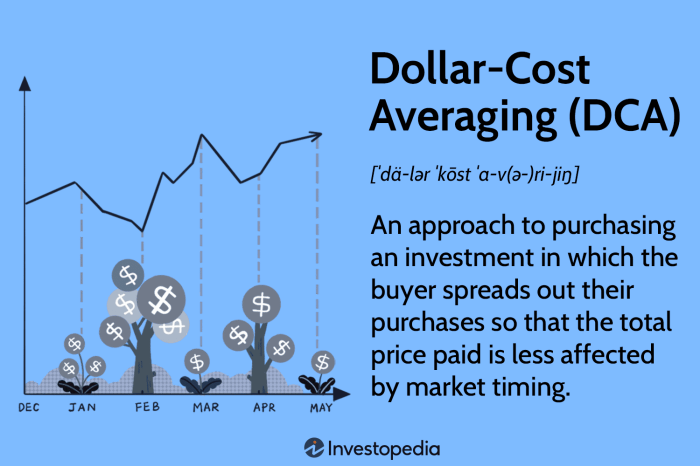
Delve into the world of Dollar Cost Averaging, a strategy that can revolutionize your investment approach. Learn how this method can help you navigate the ups and downs of the market with ease.
Discover the inner workings of Dollar Cost Averaging and how it can potentially increase your investment returns over time.
What is Dollar Cost Averaging?
Dollar Cost Averaging is an investment strategy where an investor regularly invests a fixed amount of money into a particular investment over a period of time, regardless of the asset’s price. This approach aims to reduce the impact of market volatility on the overall purchase price of the investment.
How Dollar Cost Averaging Works
Dollar Cost Averaging involves consistently investing a fixed amount of money, such as buying a set number of shares of a stock or units of a mutual fund, at regular intervals. For example, an investor may decide to invest $500 in a particular stock every month. This strategy results in buying more shares when prices are low and fewer shares when prices are high, averaging out the purchase price over time.
Benefits of using Dollar Cost Averaging in Investments
- Reduces the impact of market volatility: By investing a fixed amount regularly, Dollar Cost Averaging helps smooth out the effects of market fluctuations on the overall purchase price.
- Discipline and consistency: This strategy encourages disciplined investing by removing the need to time the market, as investments are made automatically at set intervals.
- Potential for lower average cost: Buying more shares when prices are low can lower the average cost per share over time, potentially increasing returns when prices rise.
- Emotional benefits: Dollar Cost Averaging can help investors avoid making emotional decisions based on short-term market movements, promoting a long-term investment mindset.
How to Implement Dollar Cost Averaging?
Implementing Dollar Cost Averaging is a straightforward process that can help reduce the impact of market volatility on your investments. Here are the steps to get started and best practices to follow:
Steps to Start Dollar Cost Averaging:
- Set a regular investment schedule: Determine how often you want to invest, whether it’s monthly, quarterly, or another interval.
- Choose your investment: Select a diversified portfolio of stocks, bonds, or mutual funds that align with your financial goals.
- Decide on the amount: Determine how much money you will invest during each interval, keeping it consistent over time.
- Automate your investments: Set up automatic transfers from your bank account to your investment account to ensure consistent contributions.
Best Practices for Implementing Dollar Cost Averaging:
- Stay disciplined: Stick to your investment schedule regardless of market fluctuations to benefit from the strategy’s long-term advantages.
- Focus on asset allocation: Diversify your investments to spread risk and maximize returns over time.
- Rebalance periodically: Regularly review your portfolio and adjust allocations to maintain your desired risk level.
Tips for Maximizing the Effectiveness of Dollar Cost Averaging:
- Take advantage of market downturns: View market dips as opportunities to buy more shares at lower prices.
- Monitor your investments: Stay informed about market trends and adjust your strategy as needed to align with your financial goals.
- Consider dollar-cost averaging with caution: While it can be a beneficial strategy, it’s essential to assess your individual circumstances and consult with a financial advisor if needed.
Dollar Cost Averaging vs. Lump Sum Investing
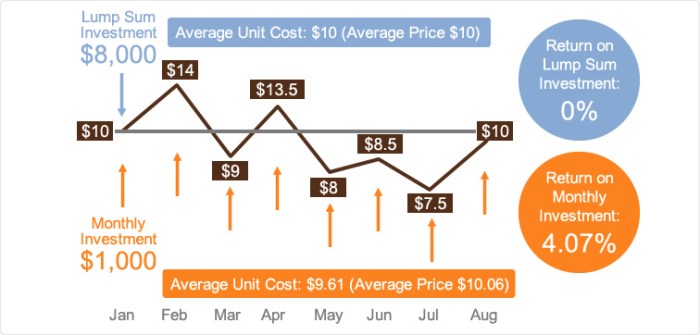
When it comes to investing, two common strategies are Dollar Cost Averaging and Lump Sum Investing. Each approach has its own advantages and disadvantages, and understanding the differences between them is crucial in making informed investment decisions.
Advantages and Disadvantages
- Dollar Cost Averaging:
- Advantages:
- Helps reduce the impact of market volatility by spreading out investments over time.
- Allows investors to benefit from dollar-cost averaging, buying more shares when prices are low and fewer shares when prices are high.
- Can be less stressful for investors who are worried about timing the market.
- Disadvantages:
- May result in missing out on potential gains if the market experiences a prolonged upward trend.
- Can lead to higher overall costs due to frequent transactions and associated fees.
- Advantages:
- Lump Sum Investing:
- Advantages:
- Potentially higher returns if the market performs well over the investment period.
- Lower overall costs compared to Dollar Cost Averaging due to fewer transactions.
- Disadvantages:
- Exposes investors to the risk of investing a large sum at an inopportune time if the market experiences a downturn.
- Can be psychologically challenging for investors who fear making a single large investment.
- Advantages:
Scenarios
- Dollar Cost Averaging:
- More suitable for investors who prioritize risk management and prefer a consistent, disciplined approach to investing.
- Recommended for investors who are unsure about market timing and want to reduce the impact of short-term market fluctuations.
- Lump Sum Investing:
- May be more appropriate for investors with a high-risk tolerance and confidence in their market timing abilities.
- Suitable for investors who believe the market is undervalued and want to maximize potential returns by investing a large sum upfront.
Understanding the Risks of Dollar Cost Averaging
When it comes to Dollar Cost Averaging (DCA), there are certain risks that investors should be aware of in order to make informed decisions about their investment strategy. While DCA can be a beneficial approach to investing, it’s important to understand the potential downsides as well.
Potential Risks Associated with Dollar Cost Averaging
- Market Timing Risk: DCA involves investing a fixed amount at regular intervals, regardless of market conditions. This means you may end up buying assets at a higher price if the market is in an uptrend, leading to missed opportunities for lower-priced investments.
- Opportunity Cost: By spreading out your investments over time with DCA, you could miss out on potential gains that could have been achieved through lump sum investing during a market upswing.
- Transaction Costs: Constantly buying in smaller amounts with DCA may lead to higher transaction costs compared to making fewer, larger investments.
Mitigating Risks with Dollar Cost Averaging
- Diversification: Spread your DCA investments across different assets or sectors to reduce reliance on the performance of a single investment.
- Regular Review: Monitor the market conditions and your investment strategy regularly to adjust your DCA plan if needed.
- Consider Lump Sum Investing: Evaluate whether investing a larger sum upfront might be more suitable based on market conditions and your financial goals.
Instances When Dollar Cost Averaging May Not Be the Best Strategy
- Bull Markets: During prolonged periods of market growth, lump sum investing may yield better returns than DCA due to missed opportunities for higher gains.
- High Volatility: In highly volatile markets, DCA may not provide the desired risk mitigation, as frequent investments could lead to increased exposure to market fluctuations.
- Short-Term Goals: If you have short-term financial goals or need immediate access to your funds, DCA may not align with your investment timeline.
In conclusion, Dollar Cost Averaging offers a disciplined approach to investing that can lead to long-term financial growth. Embrace this strategy to secure a stable financial future.
Q&A
Is Dollar Cost Averaging only for experienced investors?
Dollar Cost Averaging can be utilized by both novice and experienced investors to mitigate market volatility and build a diversified portfolio over time.
Can Dollar Cost Averaging guarantee profits?
While Dollar Cost Averaging can help reduce the impact of market fluctuations, it does not guarantee profits as investment returns are subject to market performance.
Is Dollar Cost Averaging suitable for all types of investments?
Dollar Cost Averaging is commonly used for long-term investments in assets like stocks, mutual funds, and ETFs, but may not be ideal for short-term trading strategies.
:max_bytes(150000):strip_icc()/dotdash_Final_Choosing_between_dollar_cost_and_value_averaging_Feb_2020-b7f84326e7ad417788c0969f6a568124.jpg?w=700)


