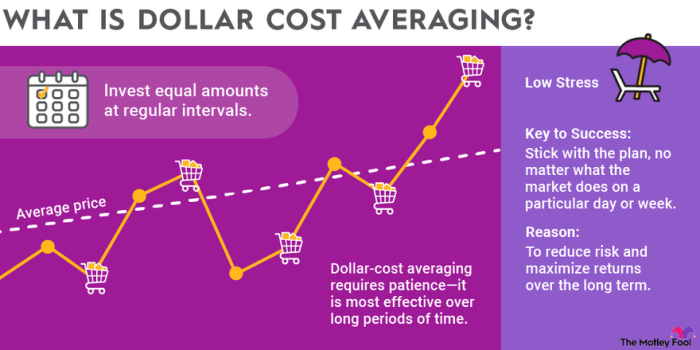
With Dollar Cost Averaging in Stock Market at the forefront, this paragraph opens a window to an amazing start and intrigue, inviting readers to embark on a storytelling journey filled with unexpected twists and insights.
Dollar Cost Averaging (DCA) is a popular investment strategy that involves investing a fixed amount of money at regular intervals, regardless of market conditions. It is a method that aims to reduce the impact of market volatility on an investment portfolio, providing a disciplined approach to building wealth over time. This article delves into the intricacies of DCA, exploring its benefits, risks, and limitations in the context of the stock market.
Introduction to Dollar Cost Averaging (DCA)
Dollar Cost Averaging (DCA) is an investment strategy where an investor divides the total amount to be invested across periodic purchases of a target asset, such as stocks, regardless of the asset’s price. This approach helps reduce the impact of market volatility on the overall purchase price.
Brief History of Dollar Cost Averaging
Dollar Cost Averaging gained popularity during the Great Depression in the 1930s when investors were looking for ways to navigate the turbulent stock market. The strategy was further solidified in the 1950s with the rise of mutual funds, making it more accessible to individual investors.
Benefits of Using DCA as an Investment Strategy
- Minimizes the impact of market volatility: By spreading out purchases over time, DCA reduces the risk of investing a large sum at a market peak.
- Disciplined approach to investing: DCA encourages consistent investing, regardless of market conditions, fostering a long-term investment mindset.
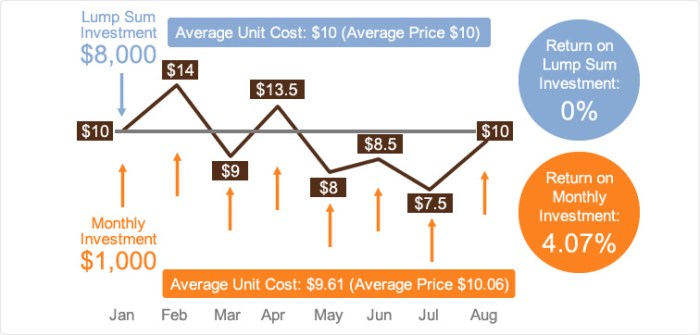
- Potential for lower average purchase price: Buying more shares when prices are low and fewer shares when prices are high can result in a lower average cost per share over time.
- Emotional detachment from market fluctuations: DCA helps investors avoid making impulsive decisions based on short-term market movements.
How Dollar Cost Averaging Works
Dollar Cost Averaging (DCA) is a strategy used by investors to mitigate the impact of market volatility by investing a fixed amount of money at regular intervals.Regular investments at fixed intervals help smooth out the impact of market fluctuations on the overall cost of investment.
Implementing DCA in the Stock Market
When implementing DCA, an investor decides on a fixed amount to invest regularly, regardless of market conditions.The investor then purchases more shares when prices are low and fewer shares when prices are high, averaging out the cost over time.
Mitigating Market Volatility with DCA
By investing a fixed amount at regular intervals, investors buy more shares when prices are low and fewer shares when prices are high.This helps reduce the impact of market fluctuations on the overall cost of investment, leading to a more stable and potentially profitable investment strategy.
Comparing DCA with Lump-Sum Investing
Dollar Cost Averaging is often compared with lump-sum investing, where an investor puts a large sum of money into the market at once.While lump-sum investing can result in immediate gains if the market goes up, it also exposes the investor to the risk of significant losses if the market declines shortly after the investment.DCA, on the other hand, spreads out the investment over time, reducing the risk of investing a large sum at an inopportune time.
Advantages of Dollar Cost Averaging
When it comes to investing in the stock market, Dollar Cost Averaging (DCA) offers several advantages for long-term investors. One of the key benefits of DCA is its ability to reduce the impact of market fluctuations on your investment portfolio. Let’s explore how DCA can help investors achieve their long-term financial goals.
Reduces Market Fluctuations
Dollar Cost Averaging works by spreading out your investment over time, rather than investing a lump sum all at once. This strategy helps to mitigate the risk of investing a large amount of money at a market peak, as it allows you to buy more shares when prices are low and fewer shares when prices are high. By averaging out your purchase price over time, DCA helps smooth out the effects of market volatility on your investment returns.
Successful Investment Outcomes
One example of successful investment outcomes using DCA is when an investor consistently invests a fixed amount of money in a particular stock or index fund every month, regardless of market conditions. Over time, this disciplined approach can result in a lower average cost per share and potentially higher returns compared to trying to time the market. DCA allows investors to benefit from the power of compounding and dollar-cost averaging, ultimately helping them build wealth steadily over the long term.
Risks and Limitations of Dollar Cost Averaging
While Dollar Cost Averaging (DCA) can be a beneficial strategy for long-term investors, it also comes with its own set of risks and limitations that investors should be aware of.
Market Timing Risk
One of the main risks associated with DCA is market timing risk. Since DCA involves investing a fixed amount at regular intervals, investors may end up buying more shares when prices are high and fewer shares when prices are low. This can lead to suboptimal returns compared to lump-sum investing during a market downturn.
Lack of Flexibility
DCA may not be suitable for investors who prefer more flexibility in their investment decisions. Once you commit to a DCA strategy, you are locked into investing a fixed amount at regular intervals, regardless of market conditions or your financial situation.
Limitations in Bull Markets
During prolonged bull markets, DCA may underperform compared to lump-sum investing. If the market consistently trends upward, investors using DCA may miss out on potential gains by not fully investing their capital at the beginning of the upward trend.
Emotional Impact
Investors using DCA may also face emotional challenges, especially during periods of high market volatility. Seeing the value of their investments fluctuate can lead to emotional decision-making, such as stopping contributions or selling off investments prematurely.
In conclusion, Dollar Cost Averaging in Stock Market offers a systematic and disciplined approach to investing, allowing individuals to navigate market fluctuations with confidence. By consistently investing over time, investors can benefit from the power of compounding returns and reduce the risk associated with trying to time the market. Whether you are a seasoned investor or just starting out, DCA can be a valuable tool in your financial arsenal, helping you achieve your long-term investment goals.
General Inquiries
What is Dollar Cost Averaging?
Dollar Cost Averaging is an investment strategy where an individual invests a fixed amount of money at regular intervals, regardless of market conditions. This approach aims to reduce the impact of market volatility on an investment portfolio.
How does Dollar Cost Averaging work?
Dollar Cost Averaging works by spreading out investments over time, which can help mitigate the effects of market fluctuations. By investing a fixed amount at regular intervals, investors can benefit from buying more shares when prices are low and fewer shares when prices are high.
What are the advantages of Dollar Cost Averaging?
Some advantages of Dollar Cost Averaging include reducing the impact of market fluctuations, instilling discipline in investing, and potentially lowering the average cost per share over time.
What are the risks associated with Dollar Cost Averaging?
One risk of Dollar Cost Averaging is that it may result in missed opportunities for higher returns if the market experiences a prolonged uptrend. Additionally, investors need to be aware of potential fees and taxes associated with regular investing.
:max_bytes(150000):strip_icc()/dotdash_Final_Choosing_between_dollar_cost_and_value_averaging_Feb_2020-b7f84326e7ad417788c0969f6a568124.jpg?w=700)


