Dollar Cost Averaging in Real Estate Investments sets the stage for this enthralling narrative, offering readers a glimpse into a story that is rich in detail with casual formal language style and brimming with originality from the outset.
Dive into the world of real estate investments and discover how Dollar Cost Averaging can be a game-changer for savvy investors looking to build wealth steadily.
Dollar Cost Averaging
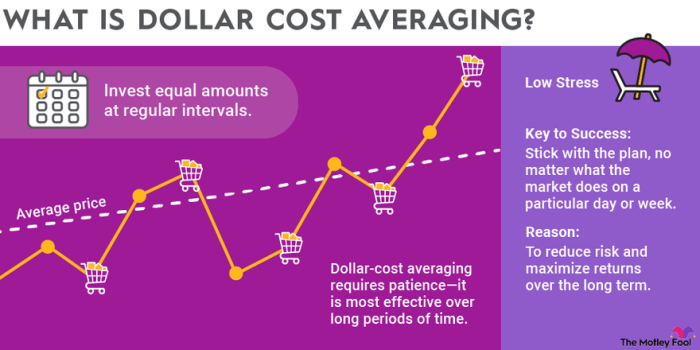
Dollar Cost Averaging is a strategy used by real estate investors to spread out their investment over time rather than investing a large sum all at once. This approach helps investors reduce the impact of market volatility and minimize the risk of making poor investment decisions based on short-term fluctuations.
How Dollar Cost Averaging Works in Real Estate Investments
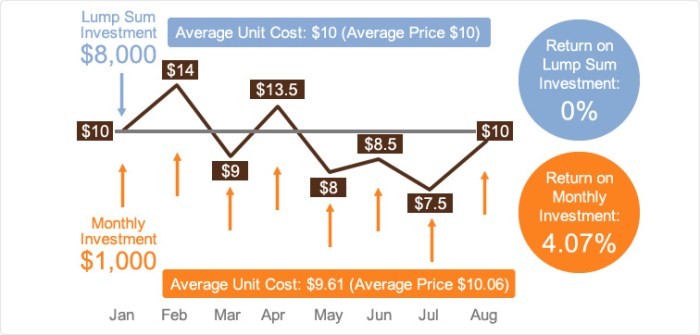
Dollar Cost Averaging in real estate involves investing a fixed amount of money at regular intervals, regardless of the current market conditions. For example, an investor may decide to invest $1000 in real estate every month, regardless of whether prices are high or low. This consistent approach helps to average out the overall cost of the investment.
- By investing a fixed amount regularly, investors can take advantage of market fluctuations. When prices are low, the fixed amount will buy more assets, and when prices are high, the fixed amount will buy fewer assets. Over time, this strategy can result in a lower average cost per unit.
- Dollar Cost Averaging helps investors avoid trying to time the market, which can be challenging and risky. Instead of worrying about when to buy or sell, investors can focus on the long-term growth potential of their real estate investments.
- This strategy also helps to reduce the impact of emotional decision-making. By sticking to a predetermined investment plan, investors can avoid making impulsive decisions based on fear or greed.
Benefits of Dollar Cost Averaging in Real Estate
- Reduce the risk of investing a large sum at the wrong time
- Smooth out the impact of market volatility on the overall investment
- Take advantage of dollar-cost averaging to potentially lower the average cost per unit over time
Benefits of Dollar Cost Averaging in Real Estate Investments
Dollar Cost Averaging (DCA) in real estate investments offers several benefits that can help investors navigate the volatile market effectively.
Mitigation of Market Fluctuations
DCA helps mitigate the risk of market fluctuations in real estate by spreading out the investment over time. Instead of making a lump-sum investment at a single point in time, DCA allows investors to invest at regular intervals, reducing the impact of short-term market volatility on their overall investment. This strategy can help smooth out the highs and lows of the real estate market, providing a more stable and predictable investment experience.
Capitalizing on Market Downturns
One of the key advantages of DCA in real estate investments is the ability to capitalize on market downturns. When the market experiences a downturn and property prices drop, investors using DCA can purchase more properties at lower prices. By consistently investing over time, investors can take advantage of these market opportunities and potentially increase their returns when the market eventually recovers.
Lower Average Cost per Property
Another benefit of DCA in real estate investments is the potential for a lower average cost per property over time. By investing a fixed amount at regular intervals, investors can buy properties at different price points. This strategy can result in a lower average cost per property compared to making a single large investment at a single point in time.
Over the long term, this can lead to a more cost-effective investment approach and potentially higher returns for investors.
Implementing Dollar Cost Averaging in Real Estate
When it comes to setting up a Dollar Cost Averaging (DCA) strategy for real estate investments, there are specific steps to follow to ensure a systematic approach.
Setting Up a DCA Strategy
- Open a brokerage account or work with a real estate investment professional to facilitate the buying and selling of properties.
- Determine the amount you want to invest in real estate regularly, whether it’s monthly, quarterly, or semi-annually.
- Select the properties or real estate investment vehicles you want to invest in for the long term.
- Set up automatic transfers from your bank account to your investment account to ensure consistent contributions.
Frequency of Contributions
Investors should contribute funds for DCA in real estate based on their financial goals and cash flow. Typically, monthly contributions are common for DCA strategies, but investors can adjust the frequency based on their preferences and financial situation.
Adjusting the Strategy Based on Market Conditions
- Monitor the real estate market trends and economic conditions regularly to make informed decisions.
- Consider increasing contributions during market downturns to take advantage of lower prices.
- Reassess your investment portfolio periodically and make adjustments as needed to stay aligned with your long-term goals.
Comparison with Lump Sum Investing
When it comes to investing in real estate, there are two main strategies to consider: Dollar Cost Averaging and lump sum investing. Each approach has its own set of advantages and disadvantages that can significantly impact your investment outcomes.
Advantages of Dollar Cost Averaging over Lump Sum Investing
- Dollar Cost Averaging helps reduce the impact of market volatility by spreading out your investment over time, allowing you to buy more shares when prices are low and fewer shares when prices are high.
- It eliminates the need to time the market, as you invest a fixed amount regularly regardless of market conditions.
- It can help mitigate the risk of investing a large sum at an inopportune time, as you are buying at different price points over time.
Disadvantages of Dollar Cost Averaging over Lump Sum Investing
- You may miss out on potential gains if the market experiences a prolonged upward trend, as you would have been better off investing a lump sum at the beginning.
- It can lead to higher transaction costs over time, as you are making multiple smaller investments instead of one large one.
- There is a psychological aspect to Dollar Cost Averaging, as some investors may feel frustrated if the market performs well while they are still in the process of averaging their cost.
Scenarios where Dollar Cost Averaging may be more suitable than Lump Sum Investing in Real Estate
- For investors who are unsure about market timing and want to reduce the risk of making a large investment at the wrong time, Dollar Cost Averaging can provide a more conservative approach.
- In uncertain market conditions or during periods of high volatility, Dollar Cost Averaging can help smooth out the impact of price fluctuations and reduce overall risk.
- For investors who prefer a disciplined and systematic approach to investing, Dollar Cost Averaging offers a structured way to build their real estate portfolio over time.
In conclusion, Dollar Cost Averaging in Real Estate Investments emerges as a strategic tool that can yield long-term benefits, providing investors with a method to navigate market uncertainties and achieve financial goals with prudence and foresight.
Key Questions Answered
How often should I contribute funds for Dollar Cost Averaging in real estate?
It is recommended to contribute funds regularly, whether monthly or quarterly, to take advantage of averaging costs over time.
Is Dollar Cost Averaging more suitable than lump sum investing in all market conditions?
No, Dollar Cost Averaging may be more advantageous in volatile markets where timing the market is challenging.
Can Dollar Cost Averaging work for both residential and commercial real estate investments?
Yes, Dollar Cost Averaging can be applied to both residential and commercial properties to spread risk and enhance returns.

:max_bytes(150000):strip_icc()/dotdash_Final_Choosing_between_dollar_cost_and_value_averaging_Feb_2020-b7f84326e7ad417788c0969f6a568124.jpg?w=700)


