
Starting with Dollar Cost Averaging Risks, this discussion delves into the potential pitfalls of this investment strategy, offering insights on how to navigate them effectively.
Exploring the intricacies of market fluctuations and risk management, this overview provides a comprehensive look at the challenges investors may face with dollar cost averaging.
DOLLAR COST
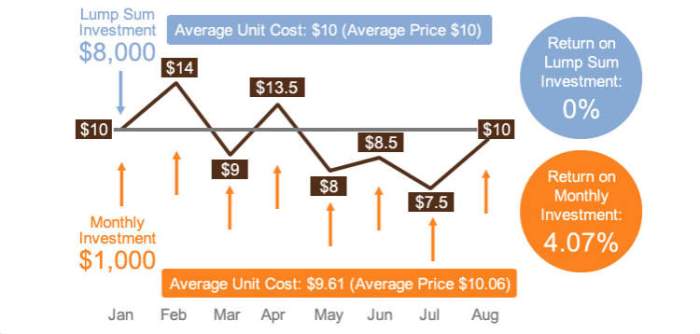
Dollar-cost averaging is a strategy used by investors to mitigate the impact of market volatility on their investments. Instead of trying to time the market, investors commit to investing a fixed amount of money at regular intervals, regardless of the price of the asset. This approach allows investors to buy more shares when prices are low and fewer shares when prices are high, ultimately reducing the average cost per share over time.
How Dollar Cost Averaging Works
Using dollar-cost averaging, an investor would invest a set amount of money, say $100, in a particular stock or fund on a monthly basis. If the price per share is $10 in the first month, the investor would purchase 10 shares. If the price increases to $20 in the second month, the same $100 would only buy 5 shares. By continuing this process over a longer period, the investor ends up with an average cost per share that is lower than the average price per share over the same timeframe.
Benefits of Investing with Dollar-Cost Averaging
- Reduced Risk: Dollar-cost averaging helps spread out the risk of investing by avoiding the need to time the market and potentially making large investments at the wrong time.
- Discipline: This strategy encourages regular investing, promoting a disciplined approach to long-term investing goals.
- Potential for Lower Average Cost: By buying more shares when prices are low and fewer shares when prices are high, investors can potentially lower their average cost per share over time.
- Emotional Control: Dollar-cost averaging can help investors avoid making emotional decisions based on short-term market fluctuations.
Dollar Cost Averaging Risks
When utilizing the dollar cost averaging strategy, there are certain risks that investors should be aware of. These risks can impact the overall effectiveness of the approach and the returns on investments. It is essential to understand these risks and how to mitigate them effectively.
Market Fluctuations Impact
Market fluctuations play a significant role in influencing the outcomes of dollar cost averaging. During periods of high volatility, investors may end up purchasing more shares at higher prices, potentially reducing the cost-effectiveness of the strategy. On the other hand, during periods of low volatility, investors may miss out on opportunities to buy more shares at lower prices.To mitigate the impact of market fluctuations, investors can consider diversifying their investments across different asset classes or sectors.
This approach can help spread out the risk and reduce the reliance on a single investment, minimizing the effects of market fluctuations on the overall portfolio.
Mitigating Risks
- Regularly review and adjust investment allocations to ensure they align with financial goals and risk tolerance.
- Stay informed about market trends and economic indicators to make informed decisions about when to increase or decrease investments.
- Consider setting stop-loss orders to automatically sell investments if they reach a certain predetermined price, protecting against significant losses.
- Consult with a financial advisor to develop a personalized investment strategy that takes into account individual circumstances and goals.
In conclusion, Dollar Cost Averaging Risks underscore the importance of a well-rounded investment approach, emphasizing the need for vigilance and strategic decision-making in the face of uncertainty.
General Inquiries
What are the key risks associated with dollar cost averaging?
The main risks include potential losses during market downturns and the possibility of missing out on buying opportunities during market upswings.
How can investors mitigate risks when using the dollar cost averaging strategy?
Investors can diversify their investments, stay informed about market trends, and maintain a long-term perspective to mitigate risks effectively.

:max_bytes(150000):strip_icc()/dotdash_Final_Choosing_between_dollar_cost_and_value_averaging_Feb_2020-b7f84326e7ad417788c0969f6a568124.jpg?w=700)


